Our Impact
Results from our programs and our accountability practices.
Program Indicators
Of the eleven indicators, five come from VIHvosApp records: people served, HIV tests, syphilis tests, treatment visits for syphilis or other STIs, and PrEP visits. One comes from the earthquake response outreach records: people seen in primary care. Five are approximate figures (≈), and each one states its method: information materials, condoms, lubricants, indirect beneficiaries of the earthquake response, and those reached with information through digital platforms. The homepage summarizes four of these indicators.
Source: VIHvosApp records (all populations, August 14, 2024 to November 23, 2026), earthquake response outreach records, and Meta Business Suite (Instagram) · Approximate figures state their method
Unique people served directly
Rapid HIV tests performed
Rapid syphilis tests performed
Treatment visits for syphilis or other STIs (since October 22, 2025)
Pre-exposure prophylaxis (PrEP) visits (since December 17, 2025)
Information materials distributed (1 per person served)
Condoms distributed (36 per person served)
Water-based lubricants distributed (6 per person served)
People seen in primary care · 2026 earthquake response (August 4 to October 31, 2026)
Household members (indirect beneficiaries) · 2026 earthquake response
Indirect beneficiaries reached with information through digital platforms · accounts reached on @PPFoundationVE on Instagram, March 10 to November 23, 2026
An approximate figure, not a count. It refers to the family members living with the 1,176 people who received a primary care consultation (1,189 total consultations, including 101 provided by partner organizations) in shelters, camps and affected communities between August 4 and October 31, 2026. It is calculated with 2.9 people per family unit, based on the census of two shelters served: the other 1.9 members of each unit are counted and the people seen are deducted once, so they are not also counted as relatives of other people seen, following WPHF guidance: 1,176 × 1.9 − 1,176 = 1,058. If each family had only one person seen, the result would be 2,234 (1,176 × 1.9); if it had two, 529 (1,176 ÷ 2 × 0.9). Hence the range of about 500 to about 2,200 people. This figure is not added to the number of people served. For HIV prevention we do not calculate family members or contacts of the people served because we have not measured them. Method: Save the Children, Thematic-Specific Guidance for Estimating Total Reach. Emergencies (2011), and WPHF, Tip Sheet: Counting Beneficiaries (2021).
Accounts, not people: one person may use more than one account, and an account may belong to an organization. This is the number of distinct accounts that viewed at least one piece of @PPFoundationVE content on Instagram between March 10 and November 23, 2026, the first and last days with this data. Source: Meta Business Suite, “Reach” metric for the full period, which does not repeat accounts (retrieved November 23, 2026). Meta shows the figure rounded (116.4K); it is rounded down here. It includes the reach of promoted posts. Between August 2026 (the first month with this record) and November 23, 2026, 359 accounts wrote to us by direct message (445 conversations); 84 of them came through paid ads. Instagram reach (≈ 116,000 accounts) is not added to those accounts, to the people served, or to the household members of the emergency response. Method: WPHF, Tip Sheet: Counting Beneficiaries (2021), which classifies the social media audience reached as indirect beneficiaries.
Compliance Standards
- Free, guaranteed care — without exception.
- Confidential, safe, stigma-free processes.
- Independent annual financial audits.
- Periodic program compliance reports.
- Strict compliance with PSEA protocol (Prevention of Sexual Exploitation and Abuse).
- Nonprofit incorporated in Florida, with community programs in Venezuela.
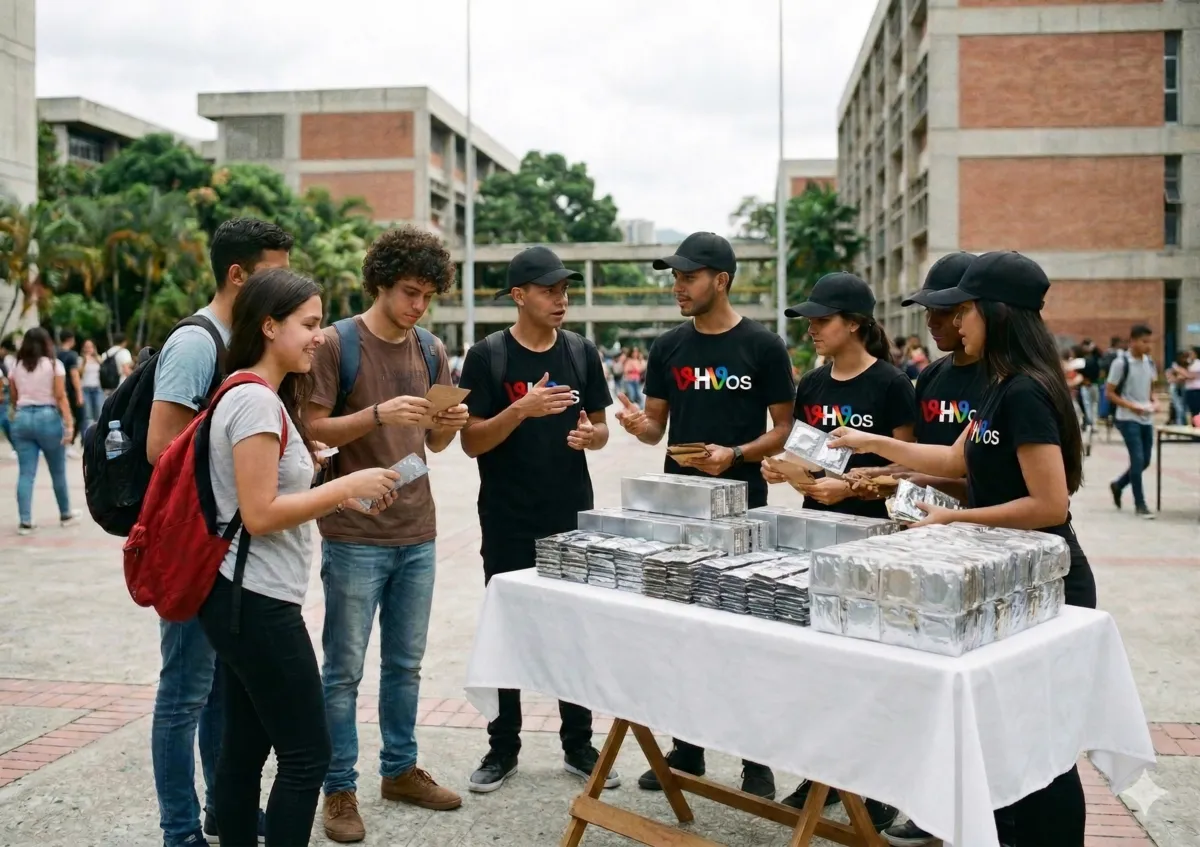
Combined prevention in action: prevention kits distributed at universities in Caracas.
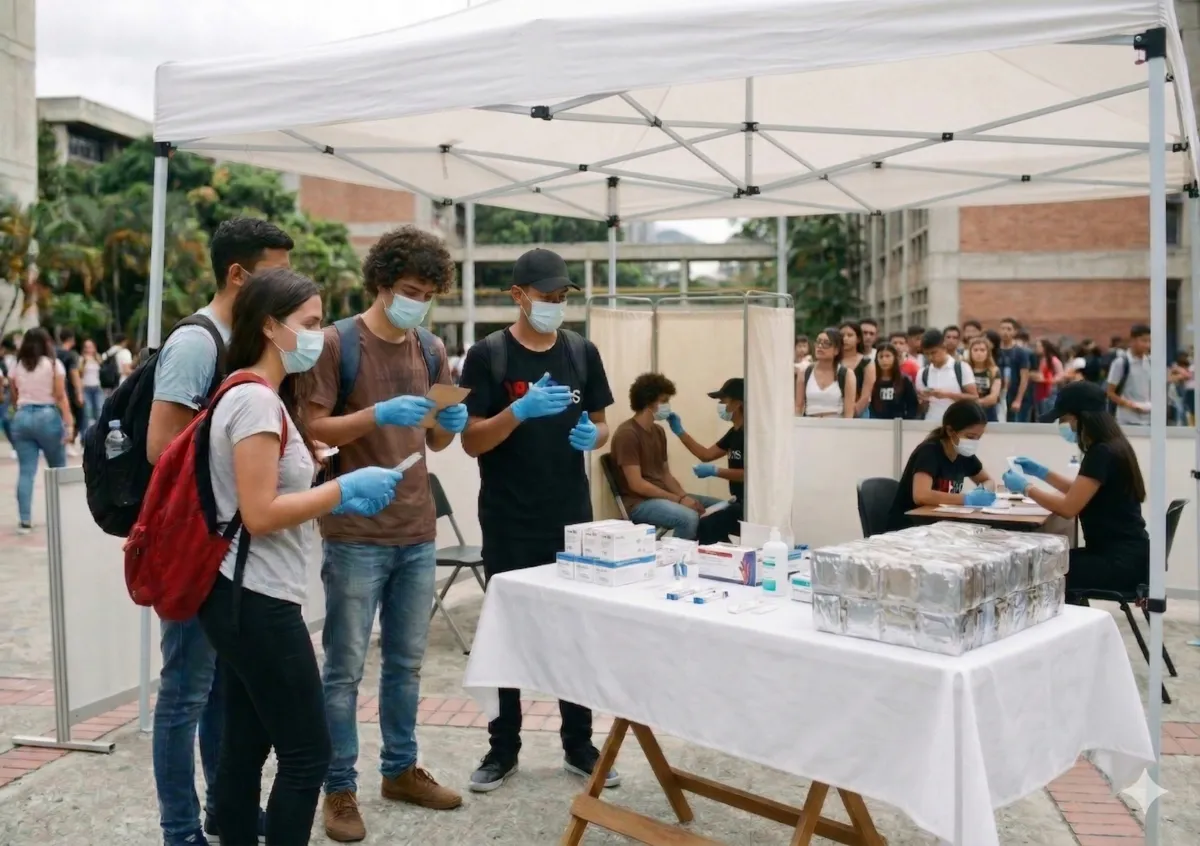
Rapid voluntary HIV and Syphilis testing at community health drives.
Indicators Report
2026 semiannual report.